
Trying to get a business loan as a small company still feels like applying for a royal pardon. You send PDFs into a portal, wait three weeks, and then get a politely worded “no” because you don’t look enough like last decade’s ideal borrower.
Now the new pitch is: “AI-powered underwriting instant decisions, fairer access, better rates.” Which sounds great, especially if you’re a tech person who would rather ship features than spend evenings wrestling with cash flow and bank statements.
The reality is messier. AI underwriting has let lenders cut decision times from days to minutes and reduce default rates, while approving more good borrowers who used to fall through the cracks. But it has also created a wave of slick online platforms that make it way too easy to accept expensive money you don’t actually understand.
So let’s talk about the platforms using AI underwriting well and how to use them without accidentally turning your “startup” into a very stylish debt problem.
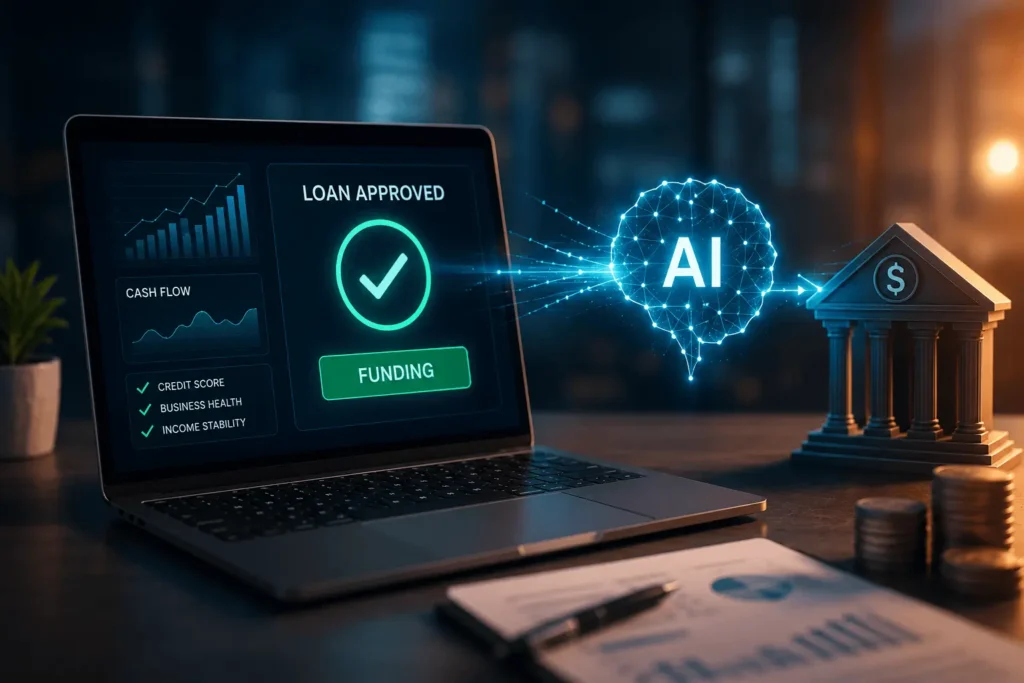
THE THING NOBODY ACTUALLY SAYS OUT LOUD
Everyone loves to say “AI is making lending more inclusive.” That’s the conference slide. The less sexy follow-up is: inclusive… for borrowers whose data is clean, structured, and connected to the right APIs.
Most AI-driven underwriting doesn’t “read your soul.” It reads your transaction history, accounting data, tax filings, and industry patterns. If your books are a mess and your Stripe balance looks like a heart monitor, the model isn’t going to stand up and say, “But they have big dreams.”
Here’s the part you actually feel as a borrower:
- Lenders using AI-based scoring can cut per-loan origination costs by around 14% and defect (error) rates by about 40% which is why they’re so into this stuff.
- Some lenders report approval rate increases of 18–32% while reducing bad debt by more than 50% when they deploy modern underwriting AI.
- Underwriting decisions that took days or weeks can now be turned around in minutes or hours, because the system is munching through hundreds of data points instead of a human staring at three PDFs and a gut feeling.
AI underwriting isn’t “friendlier” by default it’s just faster, cheaper, and more data-hungry.
What no one wants to put on the homepage:
- If your numbers are bad, the “instant decision” will just be “instant rejection.”
- If your numbers are okay , AI can sometimes see through a thin credit file by using alternative data: cash flow patterns, invoices, industry benchmarks. This is actually great for newer businesses, but only if your real-world performance isn’t chaos.
- Models can absolutely encode bias if they’re trained on biased data, so smart lenders now talk a lot about transparency, bias testing, and appeals processes.
There’s also a fun little incentive misalignment happening:
- Lenders deploy AI to increase approvals without blowing up defaults.
- Borrowers see “AI-powered,” assume “objective and fair,” and sometimes stop reading the part where interest rates and fees live.
Pop culture version: think of AI underwriting like that teacher who grades your project based on a rubric instead of vibe. It feels fairer… unless you didn’t read the rubric, in which case it just fails you faster.
If you go into AI loan platforms thinking “The model will see my potential,” you’ll be disappointed. If you go in thinking “The model will see my numbers,” you’ll behave very differently with your bookkeeping, which is the quiet upgrade no one markets.
HOW THIS ACTUALLY WORKS THE REAL MECHANICS
Let’s zoom in on what “AI underwriting” actually means for business loan platforms especially the ones targeting SMBs and startups.
At a high level, these platforms plug AI into three parts of the lending stack:
- Data intake and cleanup
Instead of asking you to upload everything as random PDFs, the better platforms:- connect directly to your bank accounts, accounting software, tax platforms, and sometimes payment processors
- use AI to extract data from documents (financial statements, bank statements, tax returns) automatically
This is where a lot of manual work disappears: OCR, classification, and data wrangling.
- Scoring and decision-making
The actual underwriting logic is a mix of:- Traditional credit rules (DSCR, debt-to-income, utilization, etc.)
- machine learning models trained on historical performance, looking at hundreds of variables like cash flow volatility, seasonality, sector risk, and more
These models help lenders pick out “hidden good borrowers” who might look risky under old-school scorecards, while avoiding obvious landmines.
- Workflow and oversight
Enterprise-grade AI underwriting platforms like HES LoanBox, TurnKey Lender, nCino, and others don’t just spit out a yes/no; they manage:- full loan lifecycle: origination, underwriting, servicing, collections, reporting, compliance
- version control for models and rules, audit logs, and exception handling so humans can override when neededinfo.
Here’s a short list of real-world mechanics, with some opinion baked in:
- TurnKey Lender – Cloud-based, AI-driven lending automation that covers origination, underwriting, servicing, collections, and reporting in one system. Good for lenders who want to digitize everything, but you’ll never see it as “a borrower brand” it’s infrastructure behind the scenes.
- HES LoanBox and similar commercial loan software – Think serious underwriting tools with configurable rules, AI scoring modules, and workflows for complex commercial loans. Great if you’re a bank or lender; invisible if you’re just applying for money.
- Parlay, Aloan, other “loan intelligence” tools – AI layers that sit on top of lenders’ systems to streamline qualification, automate verification, and improve SBA and small-business decision-making. They’re helping your lender say “yes” faster, but you’re still interacting with the lender’s brand.
- AI-powered lending stacks from vendors like Finastra and others – Big-fintech platforms that embed AI into traditional lending workflows to speed up approvals and improve accuracy. Again, infrastructure, not a consumer-facing logo.
The niche angle: when you search “best business loan platform using AI underwriting,” most of the actual AI magic lives in B2B software your bank or online lender is using behind the curtain not in the landing page you click. Your experience (and cost) will still depend on the lender’s policies, appetite for risk, and transparency, not just the tech vendor they picked.
COMPARISON WHAT’S ACTUALLY DIFFERENT BETWEEN YOUR OPTIONS
Since most AI underwriting lives inside lenders’ tech stacks, let’s frame this around the types of platforms you’ll face as a small business owner, plus a few representative names.
| Option / Type | What it actually does | Who it’s for | The catch |
| Fintech online lenders using AI scoring | Fast online apps, AI-driven cash-flow underwriting, often same-day or next-day decisions. | Small businesses need speed and flexible criteria. | Rates can be higher than banks; transparency varies. |
| Bank / credit union using AI platforms | Traditional lenders using AI stacks (eg, nCino, HES LoanBox, Finastra) to speed up underwriting. | Businesses want credibility, SBA options, and relationship banking. | Still slower than pure fintech; Documentation demands remain real. |
| Vertical / SBA-focused AI tools (Parlay) | AI “loan intelligence” that helps lenders pre-qualify and process SBA or SMB loans more efficiently. | Borrowers going for SBA-style or structured small-business loans. | You don’t pick the platform; your lender does. Experience varies by lender. |
| AI lending automation platforms (TurnKey etc.) | End-to-end loan automation platforms with AI underwriting baked in for lenders. | Lenders of all sizes; indirectly benefits you with faster decisions. | As a borrower, you mostly feel the speed, not the vendor choice. |
If you want one clear take: don’t obsess over the name of the AI underwriting vendor. Focus on how the lender uses it do they explain decisions, disclose fees clearly, and offer appeals or human review? For most small businesses, a solid online lender using good AI underwriting plus transparent terms beats a fancy model wrapped in vague promises.
WHAT ACTUALLY HAPPENS WHEN YOU TRY THIS
When you actually decide to apply for a business loan on a platform using AI underwriting, the experience feels very… SaaS-y.
You hit “Apply.” Instead of “Upload your entire life as PDFs,” you see:
- connect your bank accounts
- link your accounting tool
- Authorize access to payment processors, maybe tax data
You click a few OAuth prompts, and within minutes the platform has more information about your business than your actual co-founder.
From your side, it feels almost too easy. No ten-page form. No long essay about your “mission.” Just vibes… plus 24 months of transaction history.
The first surprise: how fast the preliminary result appears. Many AI-driven setups can spit out a pre-approval range in minutes. Sometimes you get a full approval the same day, especially for smaller amounts and cleaner profiles. That’s the moment most founders think, “Wow, AI lending is amazing,” and never ask the second question: “Okay, but what’s the actual price of this speed?”
Here’s a pattern you only notice if you’ve actually sat through these flows a few times:
- If your finances are clearly strong steady revenue, decent margins, clean cash flow you get reasonably priced offers faster than a traditional bank could schedule a meeting.
- If your numbers are messy but not terrible, you’ll often get some offer… but with shorter terms, higher rates, or stricter covenants. The AI hasn’t rejected you; it’s just priced in the chaos.
- If your data is thin or inconsistent, the system may ask for more docs, or bounce you out quickly with a generic “We’re unable to offer credit at this time.”
When you dig into lenders that proudly advertise AI underwriting, one thing that stands out is workflow maturity. Good ones:
- give a clear breakdown of APR, origination fees, and repayment schedule
- explain what data they used and sometimes provide a contact for questions or appeals
- combine automated scoring with human review on edge cases
Bad or mid ones lean on “proprietary algorithms” as a black box and push you to sign quickly without meaningful explanation. That’s not “smart”; that’s a red flag.
Another underrated reality: AI underwriting makes your preparation matter more. When your financial records are clean and up to date, your application flows through like butter. When your bookkeeping is six months behind and your bank account is a random mix of personal and business expenses, the system either misreads you or rejects you outright.
What most articles miss: the first AI-underwritten loan experience teaches you more about how lenders see your business than a year of vague blog posts. You’ll see which metrics seem to matter most: volatility, seasonality, concentration risk, existing debt. If you pay attention, your next 12 months of financial decisions will look very different.
And yes, one more thing that will surprise you: the more serious the lender, the more they talk about human oversight and regulatory compliance alongside their AI stack. When a lender pretends it’s “AI all the way down, no humans needed,” you should start reading the fine print like it’s your full-time job.
THE ADVICE EVERYONE GIVES VS WHAT ACTUALLY WORKS
“Just go with whoever approves you fastest”
Speed is nice when you’re stressed about payroll. But treating loan offers like pizza delivery fastest wins is how you end up paying nosebleed effective APR because you didn’t read past “Approved.”
Why it’s incomplete:
- Many AI-first lenders trade speed and flexibility for higher pricing, especially on unsecured short-term loans.
- A fast yes is great only if the terms support your actual cash flow rather than choking it.
What actually works: use speed as a filter, not a decision rule. Shortlist lenders that can underwrite quickly, then compare total cost, prepayment rules, and how repayment matches your revenue pattern before you commit.
“AI underwriting is fairer, so don’t worry about bias”
The theory: more data + better models = fewer unfair rejections. The practice: if models are trained on biased historical data, you can end up automating yesterday’s prejudice at scale.
Why this advice is naive:
- Industry, geography, and business type can still influence outcomes in ways that feel unfair.
- Some lenders are transparent about monitoring bias; others treat it as a footnote.
What actually works:
- Ask how your lender handles AI model governance, bias testing, and appeals.
- Compare offers across at least two or three lenders; if one consistently lowballs you, that’s a signal.
“If AI says no, you’re not fundable”
A rejection from an AI underwriting system feels brutal because it’s so fast. But “no” can mean many things: lack of data, messy data, or risk outside their policy band, not “your business is doomed.”
Why this advice is wrong:
- Different platforms prioritize different risk variables and segments.
- You might be a better fit for an SBA-backed loan, revenue-based financing, or even a non-AI lender.
What actually works: treat a no as feedback, not a verdict. Ask what inputs hurt you most (cash flow volatility, existing debt, sector risk) and either fix those or target lenders whose products match your pattern better.
“AI will get you the best rate automatically”
AI’s job is to help lenders price risk more accurately. Not to negotiate on your behalf. Some AI stacks help lenders increase profitability by tightening pricing to match perceived risk in a very granular way.
Why this doesn’t mean “best deal”:
- You may get a more precise rate, not necessarily the lowest rate available in the market.
- Competitive tension applying to multiple lenders still matters.
What actually works: treat AI underwriting as a faster way to collect comparable offers. Then you do the work: line up terms, cost, and flexibility side by side before choosing.
THE PRACTICAL PART WHAT TO ACTUALLY DO
Here’s how to use AI-underwritten business loan platforms like an adult, not like someone speed-running a funding mistake.
1. Clean your data before you even apply
AI underwriting loves clean, current, structured inputs. Before you hit any “Apply” button, spend a weekend:
- Reconciling your accounting software
- separating business and personal transactions as much as possible
- making sure your latest tax return and financial statements match reality
This one prep step can meaningfully change your approval odds and pricing.
2. Decide what kind of loan you actually need
Are you looking for:
- short-term working capital,
- a longer-term loan,
- line of credit,
- or SBA-style loan with better rates but more paperwork?
Different AI-driven lenders and bank platforms excel at different products. If you grab a short-term, high-rate product for a long-term need, you’ll hate your life in about six months.
3. Shortlist 2–3 lenders that actually use modern underwriting
Look for:
- established online business lenders that talk explicitly about using AI or data-driven underwriting and serve your business size
- banks or credit unions that advertise faster AI-assisted decisions but still offer human support and SBA options
Avoid offers where the tech story is strong but the fee structure is suspiciously vague.
4. Run applications in a tight window and compare offers
Because AI underwriting is fast, you can often get multiple offers in days, not weeks. Apply to your shortlist in a tight timeframe so credit pulls and market conditions are comparable. Then compare:
- total repayment
- fees and prepayment penalties
- repayment schedule vs your revenue timing
Don’t just sort by “amount approved” sort by “actually sustainable.”
5. Ask human questions about the AI process
For any lender you’re serious about, ask:
- How do you combine AI decisions with human review?
- What data sources feed the underwriting?
- What’s the appeals or reconsideration process if I think something was off?
If they dodge these questions or can’t explain in normal English, treat that as a flag.
6. Use the feedback loop to upgrade your business, not just your loan
If you get rejected, or get worse terms than expected, ask why. Some lenders especially more modern ones will indicate key drivers: weak cash flow, high existing debt, sector risk, etc. That’s literally a roadmap for what to fix over the next 6–12 months:
- smoothing revenue,
- reducing high-cost debt,
- showing more consistent margins.
Treat every application like a performance review, not just a pass/fail.
7. Decide upfront how much debt risk you’re actually comfortable with
Before offers show up, write down your “no-go” lines:
- Max monthly payment as % of average revenue
- max interest rate or factor rate you’re willing to accept
- Minimum runway you need to feel safe after taking the loan
That way, when a shiny “Approved!” screen hits, you have something more rational than adrenaline making the final call.
QUESTIONS PEOPLE ACTUALLY ASK
How does AI underwriting work for small business loans?
AI underwriting pulls data from multiple sources bank accounts, accounting systems, tax records, and sometimes alternative data and feeds it into machine learning models that estimate your risk of default and ability to repay. These models go beyond traditional credit scores by analyzing cash-flow patterns, seasonality, and industry trends. The result is often a faster, more granular decision than manual review alone, with approval rates and default rates both improving for lenders that do it well.
Are AI business loan platforms safe to use?
The safety depends less on “AI” and more on the underlying lender. Reputable banks, credit unions, and established online lenders using AI underwriting typically maintain strong security, compliance, and audit processes. They use AI to speed up decisions and reduce errors, not to bypass regulation. Risk rises when you see opaque lenders emphasizing speed and buzzwords while being vague on fees, data usage, and appeals. Always check terms, privacy policies, and regulatory credentials before you connect your financial data.
Can AI underwriting help businesses with thin or limited credit history?
Yes that’s one of its real strengths. By analyzing cash flow, transaction data, and sector patterns instead of relying solely on traditional credit scores, AI systems can identify creditworthy borrowers that older models would miss. Some lenders report substantial increases in approval rates among previously underserved segments without a spike in bad debt. That said, “thin file” doesn’t mean “no numbers”; you still need real, trackable income and reasonably clean records.
Do AI-underwritten loans have lower interest rates?
Not automatically. AI helps lenders price risk more precisely, which can translate into better rates for strong borrowers and appropriately high rates for riskier profiles. In many cases, online AI-driven lenders may be faster but slightly more expensive than traditional banks, especially for unsecured short-term loans. You still need to compare offers; AI improves the fit between risk and price, but it doesn’t guarantee you’re getting the lowest rate available in the market.
How fast are AI-approved business loans compared to banks?
Modern AI-powered underwriting platforms can process applications in minutes and issue approvals in hours to a couple of days, depending on loan type and complexity. Traditional manual underwriting can take days or weeks, especially for larger or SBA-style loans. Some banks using AI internally now bridge this gap, offering much faster decisions than they could a few years ago while keeping bank-level oversight.
What data do AI business loan platforms look at?
They typically analyze a mix of:
- bank transaction history
- accounting data and financial statements
- tax returns and sometimes payroll
- industry and macro data tied to your sector and geography
The more integrated your systems are, the more accurately the model can assess your business. That’s why integrating bookkeeping and payment platforms before applying can be a quiet superpower.
Can I appeal or challenge an AI underwriting decision?
With serious lenders, yes. Many best-practice guidelines now emphasize human oversight, documented exception handling, and clear appeals processes on top of AI models. If a lender can’t explain how to request a review or who to contact about a decision, that’s a sign they may be over-reliant on black-box scoring. When you appeal, bringing cleaner data, updated financials, or context around unusual patterns often makes the conversation more productive.info.
How do I avoid predatory AI loan offers?
Watch for classic red flags: unclear APR, aggressive “act now” pressure, refusal to explain underwriting, and no visible human support. Validate that the lender is regulated where you operate, read independent reviews, and compare offers from at least one bank or well-known online lender. AI underwriting should help the lender decide faster and more accurately, not be used as a marketing shield for expensive, opaque terms.
SO WHERE DOES THIS LEAVE YOU?
You’re building something a product, a service, a weird little startup that might one day be less weird and more “oh, that actually worked.” And you’re doing it in a credit system where AI is now woven into underwriting whether you opt in or not.
Best-case scenario, AI underwriting makes borrowing less about who you know and more about how your numbers behave. It turns clean, consistent cash flow into approvals that used to be reserved for older, more traditional businesses. Worst case, it becomes a very efficient way to say “no” faster or to hand out fast money on terms you didn’t fully read.
So here’s one concrete move: before you apply anywhere, pick one accounting / finance stack, clean your last 12–24 months of data, and run a “mock lender review” on your own numbers. Treat your business the way an underwriting model will: cash in, cash out, volatility, debt. Then go to AI-driven platforms as someone who already knows what story their data is telling, instead of hoping the model finds something there that you don’t.
It won’t make business loans easy. But it will make you a much less fragile character in this particular game.
You made it through a full article about AI underwriting, which either means you’re serious about funding or very committed to productive procrastination. Either way, you’re now ahead of most people who click “Apply” without realizing they just plugged a firehose of raw financial data into a model they’ve never thought about twice.
AI business loan platforms are not your enemy, and they’re not your savior. They’re just what happens when lending meets data science and everyone pretends the hard trade-offs have vanished. They didn’t. But if you respect those trade-offs read the terms, clean your numbers, compare your options you can actually use this stuff to grow a business instead of just funding a future “how we almost went broke” story.